Introduction
Syphilis is a sexually transmitted disease caused by bacteria spirochaete known as Treponema pallidum. Syphilis is known as the great mimicry as the disease can manifest itself in a variety of symptoms confusing both patients and physicians. We tend to presumptively aware that syphilis manifest itself over the genital areas as it is a STD. However, syphilis can manifest itself extra-genitally, including in the mouth region. Oral syphilis tends to be missed and underdiagnosed by both patients and doctors.
This article is written to increase awareness of oral syphilis and motivates both patients and physicians to consider syphilis as a differential in the event of exposure to STD and mouth rash.
Syphilis epidemiology
The historical origin of syphilis is debatable. Syphilis is first documented in the Europe following the French invading Naples resulting the condition to be also known as the 'French disease'. Another popular theory- Christopher Columbus theory states that the disease was disseminated across Europe from the sailors who navigated with Columbus in the New World.
The cases of syphilis dwindled in the 17-18th century. Nonetheless, since the past decades, syphilis cases are resurging globally. The rise in syphilis is seen more prevalent among men-sex-men, person with HIV, casual sex workers, regions with limited healthcare amenities. Worryingly, vertical transmission of syphilis from untreated pregnant mother - which previously was sparse in incidence- are also seen in certain high-income countries.
In the medieval days prior discovery of antibiotics, treatment of syphilis includes use of mercury and herbs. Following the introduction of antibiotics in the 1940s, penicillin provide a hope and cure to syphilis. Despite a preventable and treatable STD, syphilis remains a public global health concern.
Appearance of Oral Syphilis
Syphilis lesion can present itself on the skin and mucosal membrane of the genitals (vulvavagina, penis, anal) and mouth region following innoculation of the bacteria during intercourse. From the source of entry, the bacteria will further be disseminated throughout the body via lymphatic drain pathways.
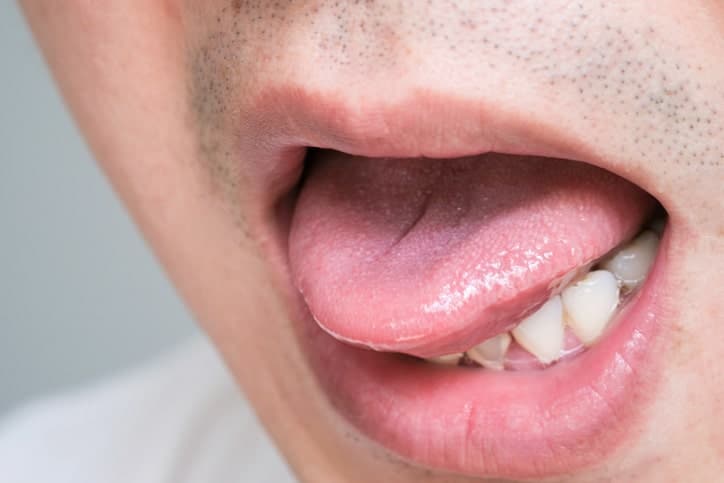
Syphilis can present on the lip or inside the oral cavity as a lump or nodule, an ulcer, a raised inflamed patch. One can experience associated symptoms such as sore throat, tonsilitis, vocal cord inflammation, or lymph node swelling. Systemically, one may also notice body rash and hair loss. The oral lesions may resolve spontaneously over 3 months even without treatment- though one is still infective unless being treated. Syphilis Lesions can be single or multiple in appearance.
Areas that can be affected include the lips, palate (roof of the mouth), uvula, pharynx (back of throat), tongue and gum.
Health Repercussion of Untreated Oral Syphilis
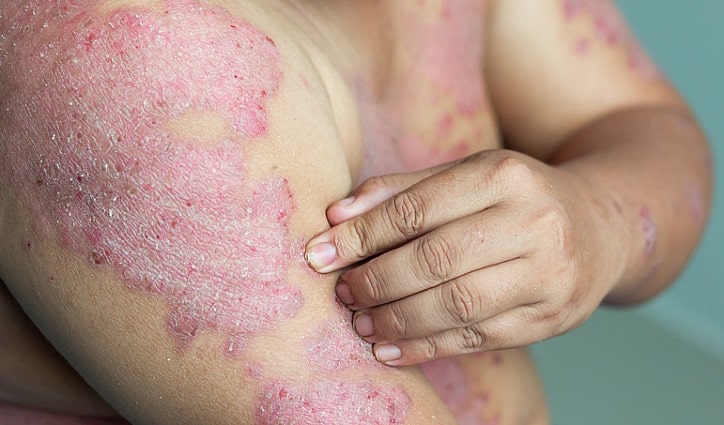
Over 3 months the lesion over the oral region can subside on its own even without treatment; however, one remains contagious. Overtime, the untreated syphilis continues to progress into secondary, latent and tertiary stages of disease. In secondary and tertiary phases, one can have rashes over the skin, mucous membrane of the mouth and genitals. More significantly, infected individuals may also experience cardiovascular and neurological complications such as heart valve diseases, blood vessel aneurysm, nerve paralysis, seizure, memory loss, dementia even insanity.
In untreated infective pregnant women, syphilis is transmissible to the unborn child. Syphilis increases the risk of miscarriage, stillbirth, birth defects such as musculoskeletal congenital abnormalities, blindness, neurological defects, mental retardation and etc.
How is oral syphilis diagnosed?
Syphilis can be tested through
- Rapid Prick Test - This is a quick finger-prick, non-invasive way to screen for syphilis.
- Blood Serological Tests - Blood tests are used to pick up antibodies produced against syphilis bacteria. Blood tests are also important to monitor activity of disease, effectiveness and response to treatment overtime.
- PCR swab test - This is a newer option. PCR/ NAAT tests are highly sensitive molecular test that screen for syphilis DNA from lesions seen on the skin and mucosal area. They are suitable for early infection, detecting active disease when blood serological tests are (too early to be positive) negative. It is not useful in asymptomatic person or in those in latent stage. PCR test is encouraged to be used as a complementary test alongside with syphilis serology for accurate diagnosis.
Discuss with your healthcare provider the suitable tests to consider for evaluation of syphilis. Contact us today.
How is oral syphilis treated?
Oral syphilis is treated with benzathine penicillin injection.
Serological level blood test is required every 3 monthly after treatment of syphilis to monitor response and effect of antibiotics.
In light of oral syphilis, are there other health investigations required?
Your healthcare physician may want to examine the rest of the body including the genitals, and other extra-genital sites such as the body, joints, and scalp.
In the event of exposure to syphilis, one should consider further evaluation of other STDs. The presence of untreated syphilis can facilitate transmission of other STDs.
Other tests to consider screening including HIV, Herpes Simplex Virus (HSV), Human Papilloma Virus (HPV), bacterial STDs such as Chlamydia trachomatis, Neisseria gonorrhea and etc.
Co-screening and treating of infective sexual partner(s) are important to break the chain of infection and prevent re-infection among the sexual couple(s).
What are the causes of treatment failure for syphilis?
While penicillin is the antibiotics of choice and is generally effective in the treatment of syphilis, treatment failure is possible due to
Reinfection
This is a common cause due to an external untreated source- a new sexual partner or an untreated sexual partner(s). All sexual partner(s) should be screened and treat to prevent the vicious chain cycle of infection.
Co-infection with other STDs
Concurrent STDs such as HIV can be associated with higher chance of syphilis treatment failure. One should consider screening for other STDs as well in the event of syphilis diagnosis and treatment.
Wrong antibiotics given
It is important to confirm with your healthcare provider on the treatment administered.
Missed dose/ inadequate dose/ poor compliance
The dose of penicillin is imperative to ensure sufficient amount of antibiotics to eradicate syphilis infection. Patient may default their follow-up appointment due to logistics, financial or personal reason.
Anatomical Differences and Differences in Antibiotic Effect
Although penicillin antibiotic is generally useful in syphilis, the penetration of antibiotics may differ when used to target different parts of the body infected with syphilis. In the case of neurosyphilis, penicillin injection may be insufficient to penetrate the central nervous system, resulting in inadequate treatment and persistent infection. One should consider the differential of neurosyphilis in the event of syphilis treatment failure.
Antibiotic resistance
Due to repeated use, presumptive treatment of STD infections with antibiotics, antimicrobial resistance is slowly rising and may contribute to failure of syphilis infection to be respondent towards penicillin anabiotics. Having said that, in comparison to other forms of antibiotics, penicillin resistance remains low.
Concerned About Oral Sores or Possible Syphilis Exposure?
Oral sores, ulcers, or persistent mouth lesions can have many causes, including sexually transmitted infections such as syphilis. If you've had a potential exposure or are experiencing symptoms, early testing is the best way to obtain an accurate diagnosis and begin treatment promptly.
At Dr Ben Medical, we provide confidential syphilis testing, comprehensive STD screening, and personalised sexual health consultations in a private and professional setting. Our experienced doctors can recommend the most appropriate tests and treatment based on your symptoms and medical history.
What have I learnt today?
- Syphilis can manifest its lesions over extra-genital mucosal surfaces such as the lips and oral mucosal areas.
- Mouth lesions secondary to syphilis can have a myriad of presentations from a rash, bump to even ulcers and tend to be underdiagnosed and misdiagnosed.
- Even if the oral syphilis lesions resolved, infected individual is still contagious unless one receive proper syphilis treatment.
- Untreated syphilis can progress to later stages of syphilis infection with potential irreversible health complications and can be spread to unborn infant during pregnancy.
- There are reliable and effective tests to screen for syphilis.
- Syphilis is treated with penicillin antibiotics as long as one is not allergic to penicillin.
- Concurrent STD screening in those with exposure risk to syphilis is imperative in long term successful syphilis treatment.
- One should follow up the response of antibiotic treatment against syphilis with regular blood tests after treatment.
References:
- Villarreal DD, Babalola CM. Expanding Horizons in Syphilis Treatment: Challenges, Advances, and Opportunities for Alternative Antibiotics. Curr HIV/AIDS Rep. 2025 Mar 13;22(1):22.
- Barreto MEZ, Ventura JVL, do Valle IB, Fonseca FP, Tenório JR, Sampaio GC, de Andrade BAB, de Arruda JAA. Acquired oral syphilis: epidemiology, diagnostic pitfalls, and treatment strategies. Oral Surg Oral Med Oral Pathol Oral Radiol. 2025 Dec;140(6):684-695
- Maloney B, Healy CM. Oral syphilis - the great imitator: a series of six cases. Br Dent J. 2024 Oct;237(7):543-549.
- Mulder van Staden S, de Villiers C, Alwan J, Moloi M, Mahlangu S. Oral Manifestations of Syphilis: Report of Four Cases. Pathogens. 2022 May 24;11(6):612.
- Zhou X, Wu MZ, Jiang TT, Chen XS. Oral Manifestations of Early Syphilis in Adults: A Systematic Review of Case Reports and Series. Sex Transm Dis. 2021 Dec 1;48(12):e209-e214.
- Luo Z, Zhu L, Ding Y, Yuan J, Li W, Wu Q, Tian L, Zhang L, Zhou G, Zhang T, Ma J, Chen Z, Yang T, Feng T, Zhang M. Factors associated with syphilis treatment failure and reinfection: a longitudinal cohort study in Shenzhen, China. BMC Infect Dis. 2017 Sep 13;17(1):620.